- HubPages»
- Education and Science»
- History & Archaeology»
- History of the Americas
The Legend of John Henry



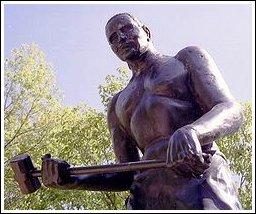
"John Henry" is perhaps the best known and most recorded American folk song dating back to the late 19th century. The ballad chronicles the story of a folk hero who was a steel driving hammer man. Some tell the story of his birth and his own belief the Hammer would be the death of him.
His job was to drive steel spikes into rock so dynamite could be placed in them in order to blast tunnels through mountains and lay track. Driving steel by hand was hard, dangerous work and it was said one in five workers were killed on the job. But, was John Henry a real person, a legendary myth or perhaps both?
Most historians believe John Henry was an actual person who became a legend following a historical event. But they tend to disagree when and where the incident took place. However, it is evident the basic premise is the same.
The story began when the railroad company Henry was working for proposed introducing a new fangled invention called a steam drill. It was their intention to make human hammer men obsolete.
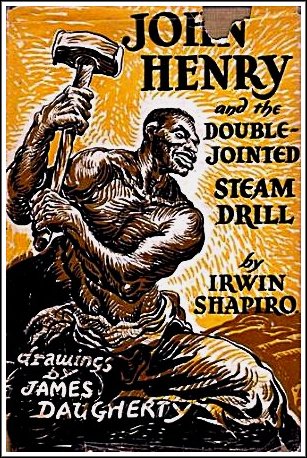
John Henry believed a man could still out drill a machine and thereby challenged the railroad to a day-long contest with a $100 wager he could beat the steam drill. He won, but what happened next has been the subject of much debate. All agree he died, but how and when is the question. Some say he died immediately after the contest from sheer exhaustion. Others say he died in a tunnel when a blast showered rocks and boulders down on him. Yet others say he became ill and died from a fever. The question may never be answered.
Where and when the contest was held is another mystery. But it’s believed to have been one of the following:
· Near Birmingham, Alabama in the late 1880s building the Coosa Tunnel for the C&W railroad.
· In Summers County, West Virginia during the 1870s building the Big Bend Tunnel.
According to Louis Chappell in his 1933 book, John Henry, a Folk Lore Study, Henry was employed by the C&O during the building of the Great Bend Tunnel. While doing research for his book in 1925 Chappell spoke to men who knew and worked with him. Some had worked as young boys, carrying water and steel for the crews. Many remembered John Henry as a six-foot tall, 200 pound Negro. Some believe he was a freed slave from Virginia.
Chappell found a few men who thought Henry was from North Carolina. A D.R. Gilpin, from Hinton, NC said, "I know he was from North Carolina, for he used to get my brother-in-law, to write letters to his people there.”
There are many stories about Henry, some fact, some legend, that have filtered down to us over time. What one chooses to believe about the larger than life icon is a personal choice.
Some stories claim he could drive steel with a hammer in each hand. There are mixed reviews on the hammer weights. They have been said to weigh as little as nine pounds to as much as forty.
According to a 1963 report submitted by Historian Lester Lively, John Henry’s hammer was found in the tunnel in 1932 when a concrete floor was poured. Apparently they had been left there on purpose. Superstition held it was bad luck to use the hammer of someone who had died.
John Henry was said to have been a happy-go-lucky individual with a quick wit and always at the ready with a joke or two. It was also said he was an excellent singer and banjo player. He could always be heard singing, whiling away the long tedious and monotonous days swinging his hammer.
Some have said the ringing of steel on steel can still be heard echoing through the mountains.